

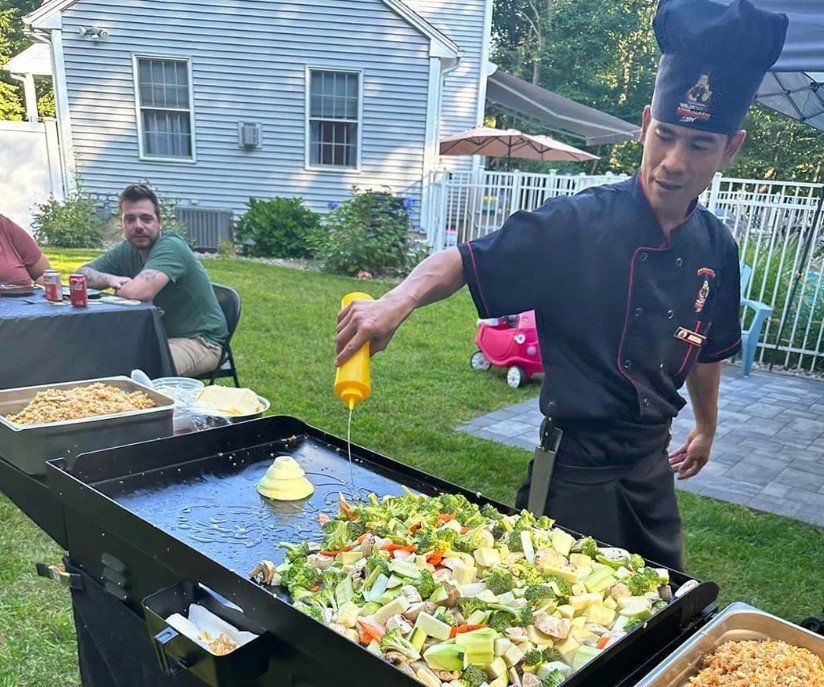
Hibachi catering brings an exciting combination of live cooking, delicious food, and entertainment directly to guests. Whether the event is a backyard celebration, corporate gathering, wedding, birthday party, or indoor dining experience, cooking in front of people requires careful planning. Because hibachi cooking involves high heat, open flames, sharp utensils, hot surfaces, and food preparation, safety should always be treated as a top priority. Following practical Hibachi catering safety guidelines can help caterers create an enjoyable experience while protecting guests, staff, and property.
Choose a Safe Cooking Location
The cooking area should be selected before the event begins. For outdoor hibachi catering, the grill should be positioned on a stable, level, non-combustible surface away from dry grass, wooden structures, curtains, decorations, and other materials that could catch fire. Adequate space should be maintained around the cooking station so guests, particularly children, cannot accidentally touch hot equipment.
For indoor events, ventilation is especially important. Hibachi cooking can produce smoke, heat, and cooking fumes, so the venue should have appropriate ventilation and comply with local fire and building requirements. The cooking station should never block emergency exits, walkways, or access to fire-safety equipment.
Inspect Equipment Before Cooking
Professional caterers should inspect grills, gas connections, hoses, burners, electrical equipment, and cooking utensils before every event. Damaged hoses, loose connections, cracked components, or malfunctioning ignition systems should not be used. Gas-powered equipment should be connected according to manufacturer instructions, and fuel containers should be stored and handled appropriately.
A pre-event inspection is an important part of Hibachi catering safety because equipment problems can become dangerous once cooking begins. Caterers should also ensure that protective equipment and fire extinguishing equipment are readily accessible.
Keep Guests at a Safe Distance
One of the unique features of hibachi catering is that guests can watch food being prepared. However, entertainment should never compromise safety. Establishing a clear boundary around the cooking station helps prevent guests from getting too close to flames, hot oil, cooking surfaces, or sharp utensils.
Tables, chairs, barriers, or clearly defined cooking zones can help maintain separation. Staff should pay particular attention to children and pets at outdoor events. Guests should also be discouraged from reaching across the grill or attempting to handle cooking equipment.
Practice Proper Fire Safety
Fire safety is essential whenever live cooking is involved. A suitable fire extinguisher should be accessible near the cooking area, and staff should know how to use it properly. Caterers should also understand the venue’s emergency procedures and identify exits before starting the event.
Grease fires require special attention. Water should never be poured onto a grease fire because it can cause burning oil to spread rapidly. Instead, appropriate fire-safety procedures should be followed, and emergency services should be contacted when necessary.
Follow Food Safety Procedures
Safe cooking involves more than managing flames. Food must be stored, transported, prepared, cooked, and served correctly. Raw meats, seafood, vegetables, and cooked foods should be handled in ways that minimize cross-contamination. Separate utensils and preparation areas should be used when appropriate.
Perishable ingredients should remain at safe temperatures during transportation and service. Raw proteins should be cooked thoroughly using appropriate food-temperature guidelines, while cooked foods should not be left at unsafe temperatures for extended periods.
Maintain Clean Cooking Stations
A clean workstation reduces the risk of contamination, slips, and accidents. Cooking surfaces, preparation areas, utensils, and frequently touched equipment should be cleaned and sanitized according to appropriate food-safety practices. Spilled oil, water, sauces, and food debris should be addressed quickly to prevent slips and other hazards.
Waste should also be managed throughout the event rather than allowing trash to accumulate near the grill. A well-organized cooking station allows staff to work efficiently while reducing unnecessary hazards.
Use Safe Cooking Techniques
Hibachi chefs often use impressive cooking techniques to entertain guests, but every performance should remain within controlled safety limits. Flames, tossing utensils, and other demonstrations should only be performed by trained professionals who understand the equipment and surroundings.
Chefs should keep handles positioned safely, avoid overcrowding the cooking surface, and remain aware of nearby guests and objects. Staff should never perform a trick simply because a guest requests it if the environment is unsuitable.
Prepare for Weather and Outdoor Conditions
Outdoor events introduce additional challenges. Strong winds can affect flames, smoke, decorations, and lightweight equipment. Rain can create slippery surfaces and interfere with electrical or cooking equipment. Caterers should monitor weather conditions and have a contingency plan for changing or postponing outdoor cooking when conditions become unsafe.
Canopies and tents should also be positioned appropriately, with cooking equipment kept at safe distances from combustible materials. The event layout should allow smoke and heat to dissipate without creating problems for guests.
Train Staff for Emergencies
Every member of the catering team should understand basic emergency procedures. Staff should know where fire extinguishers, first-aid supplies, emergency exits, and utility shutoffs are located when applicable. They should also know who is responsible for contacting emergency services if an incident occurs.
Good communication among chefs, servers, event organizers, and venue personnel makes Hibachi catering safety much easier to maintain. A short safety briefing before guests arrive can help everyone understand their responsibilities.
Make Safety Part of the Guest Experience
Safety does not have to take away from the excitement of hibachi catering. In fact, a well-organized cooking station can make the performance more enjoyable because guests can comfortably watch the chef without worrying about accidental contact with hot equipment.
By carefully planning the cooking location, inspecting equipment, controlling guest access, following food-safety practices, preparing for emergencies, and adapting to outdoor conditions, caterers can deliver an entertaining and responsible experience. Ultimately, strong Hibachi catering safety practices protect everyone involved while allowing the food, chef, and interactive atmosphere to remain the center of attention.
