

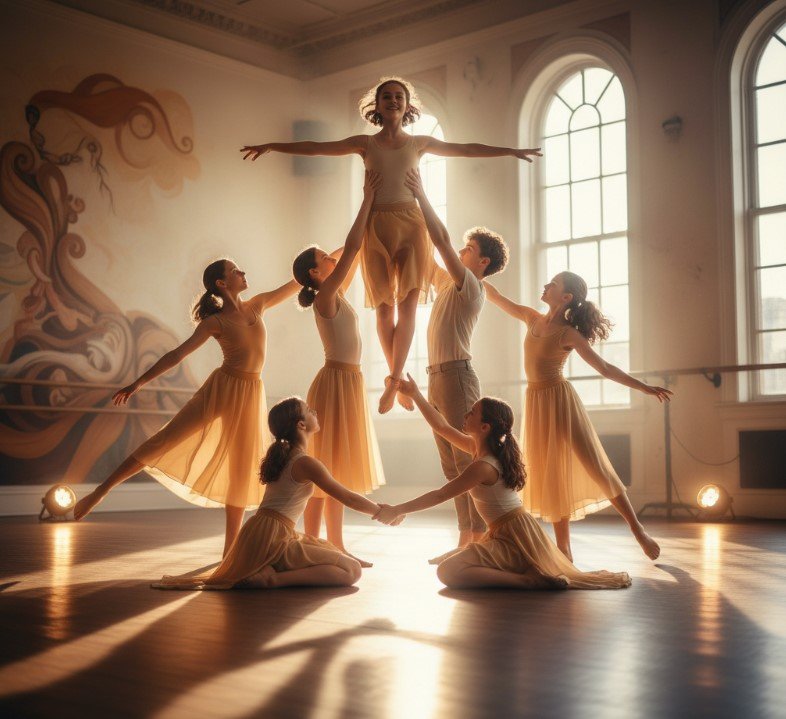
Dance education is about much more than learning choreography, improving flexibility, or mastering technical movements. A successful dance environment also depends on the relationships students build with one another. Dancers often spend long hours practicing together, facing challenges, making mistakes, and celebrating achievements. For this reason, Positive peer support in dance can have a powerful influence on both personal development and artistic growth.
When students encourage, respect, and help each other, the dance classroom becomes a safer and more motivating place. Instead of feeling afraid of mistakes or constant comparison, dancers can develop confidence and enjoy the learning process. Whether students are beginners or experienced performers, supportive relationships with peers can make a meaningful difference in their overall educational experience.
What Is Positive Peer Support in Dance?
Positive peer support in dance refers to the encouragement, understanding, cooperation, and constructive assistance that dancers provide to one another. It can appear in many simple but meaningful ways. A student may help a classmate remember a sequence, offer encouraging words before a performance, or celebrate another dancer’s improvement.
Positive support does not mean pretending that everyone performs perfectly. Dance students need feedback to improve. However, feedback should be respectful, helpful, and focused on growth rather than criticism or embarrassment.
For example, instead of saying, “You always do that move wrong,” a supportive peer might say, “Try slowing down the turn first. That helped me understand the movement.” This type of communication creates a learning environment where students feel comfortable asking questions and improving their skills.
Building Confidence Among Dance Students
Confidence is essential in dance. Students must often perform in front of teachers, classmates, audiences, and sometimes judges. This can create pressure, especially for young dancers or beginners who worry about making mistakes.
Positive peer support in dance helps reduce this pressure by reminding students that they are not alone. When classmates cheer for one another and recognize improvement, dancers may become more willing to take creative risks.
A supportive comment after a difficult rehearsal can change a student’s attitude completely. Hearing phrases such as “You improved a lot today” or “Keep practicing—you are getting better” can motivate dancers to continue working toward their goals.
Confidence developed through peer encouragement can also extend beyond the dance studio. Students may become more comfortable speaking, participating in groups, and facing challenges in other areas of life.
Creating a Strong Sense of Belonging
Every student wants to feel accepted in their learning environment. In dance education, this feeling of belonging is especially important because dance often requires close collaboration and personal expression.
Students come from different backgrounds and may have different body types, experience levels, abilities, and learning speeds. A positive peer culture teaches dancers to appreciate these differences rather than use them as reasons for exclusion.
When students support one another, new dancers are more likely to feel welcome. They can ask questions without fear of being judged and participate without feeling isolated. Experienced students can also contribute by mentoring beginners and sharing what they have learned.
As a result, Positive peer support in dance helps transform a group of individual students into a connected dance community.
Encouraging Better Learning and Skill Development
Dance is a continuous learning process. Even highly skilled dancers must practice regularly and work to improve their technique. Peer support can make this process more effective because students often learn from watching and interacting with one another.
During rehearsals, dancers can help each other remember choreography, maintain timing, understand formations, and identify areas for improvement. Working together can also make challenging lessons feel less overwhelming.
For example, a dancer struggling with a particular combination may benefit from practicing alongside a supportive classmate. The peer can demonstrate the movement, explain how they approach it, or simply provide encouragement during repeated attempts.
This collaborative approach helps students understand that learning is not always a competition. While healthy competition can motivate improvement, cooperation creates opportunities for shared success.
Reducing Fear of Mistakes
Mistakes are a natural part of dance education. A dancer may forget choreography, lose balance, miss the rhythm, or struggle with a new technique. Unfortunately, students may become discouraged if they feel embarrassed when these mistakes happen.
A positive peer environment changes how mistakes are viewed. Instead of laughing at errors or criticizing classmates, students can respond with patience and encouragement. This creates psychological safety, allowing dancers to try difficult movements without excessive fear.
Positive peer support in dance teaches an important lesson: mistakes are opportunities to learn. When students understand this, they may become more resilient and persistent.
A dancer who receives support after a disappointing performance is more likely to return to practice with determination. Over time, this ability to recover from challenges becomes an important part of both artistic and personal development.
Developing Teamwork and Communication Skills
Many forms of dance involve group performances. Dancers must understand spacing, timing, formations, and the movements of other performers. A successful performance depends not only on individual talent but also on teamwork.
Positive peer relationships improve communication within the group. Students become more comfortable discussing problems, sharing ideas, and helping one another prepare for performances.
They also learn how to listen respectfully and resolve disagreements. These are valuable skills that can be used in school, work, and everyday life.
Dance teachers can encourage teamwork by including partner exercises, group choreography, peer feedback activities, and collaborative creative projects. These experiences give students opportunities to practice supporting others while also learning how to receive support themselves.
The Role of Teachers in Promoting Peer Support
Although peer relationships develop between students, teachers play an important role in shaping the classroom culture. Teachers can set clear expectations about respect, kindness, and constructive communication.
They should model positive behavior by giving balanced feedback and recognizing effort as well as achievement. Teachers can also discourage harmful comparison, bullying, exclusion, and negative comments about appearance or ability.
Creating activities that require cooperation can strengthen Positive peer support in dance. Pairing students for practice, encouraging peer mentoring, and celebrating group achievements are effective ways to build a supportive atmosphere.
Teachers should also ensure that every student has an opportunity to participate and feel valued. A dance class becomes stronger when success is viewed as something the entire group can celebrate.
Supporting Emotional Well-Being
Dance can be emotionally demanding. Students may feel nervous before performances, frustrated during difficult rehearsals, or disappointed when they do not achieve a desired result.
Supportive peers can provide comfort during these moments. Sometimes a simple conversation, encouraging message, or shared laugh after rehearsal can improve a student’s emotional well-being.
Strong friendships within dance education can make students feel understood because their peers often share similar experiences and challenges. This sense of connection can help students manage stress and maintain motivation.
However, positive support should always be genuine and respectful. Students should learn to encourage one another without creating unhealthy pressure or ignoring someone’s feelings.
Conclusion
The importance of Positive peer support in dance cannot be overlooked. Supportive classmates can help dancers build confidence, improve skills, recover from mistakes, develop teamwork, and feel a stronger sense of belonging.
Dance education is most effective when students understand that growth does not happen through competition alone. Encouragement, cooperation, and respect can create an environment where every dancer has the opportunity to learn and develop.
By promoting positive relationships in the studio and classroom, teachers and students can build a culture where individual progress and group success work together. Ultimately, Positive peer support in dance helps create not only better dancers but also more confident, compassionate, and resilient individuals.
